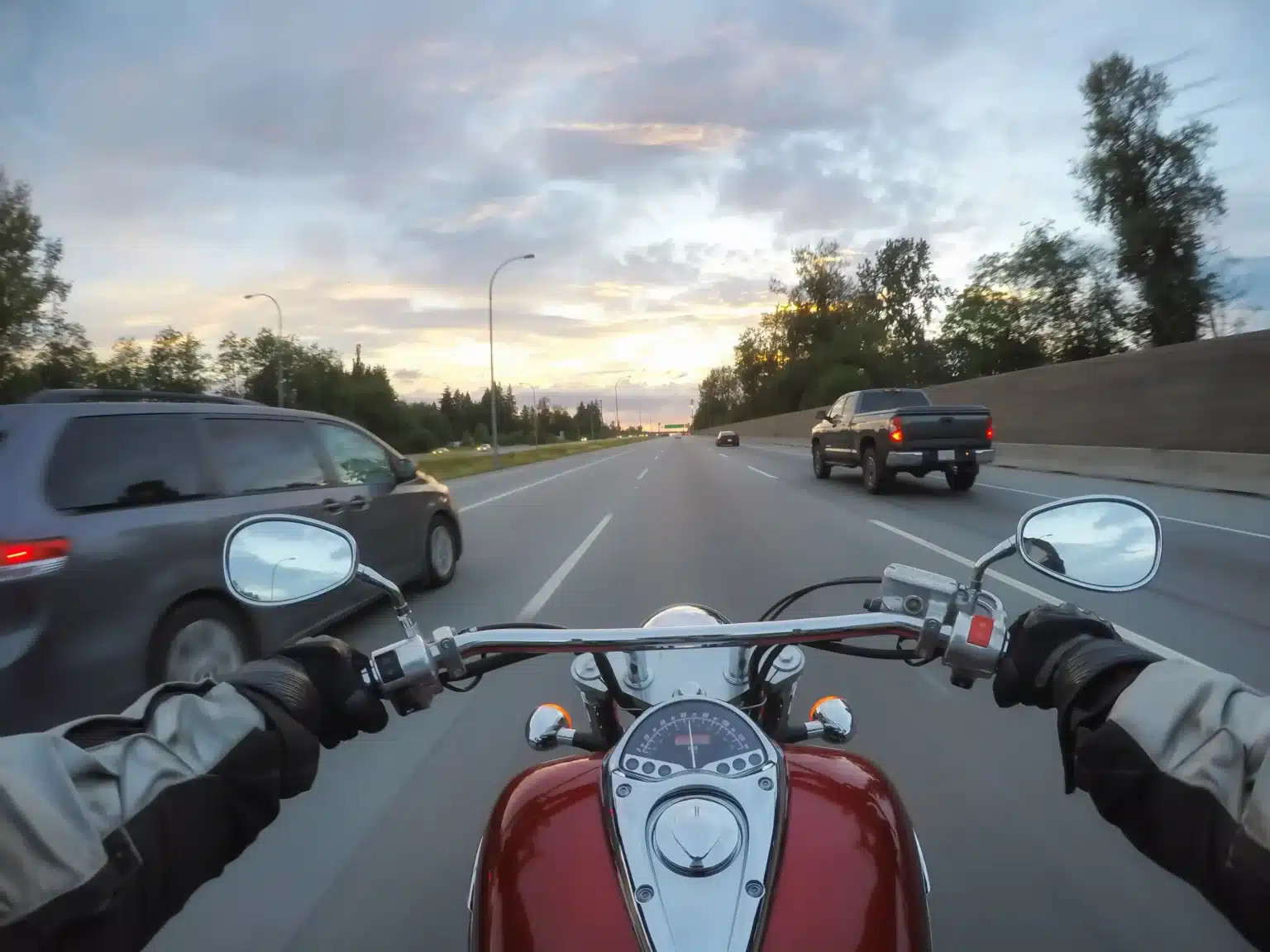

Lane splitting between vehicles is illegal in Colorado. Lane-splitting is when a motorcyclist rides between two lanes of traffic moving in the same direction. It is something only motorcyclists can do, as their narrow profile allows them to “split” the space between two traffic lanes while maneuvering.
Colorado law separates lane- splitting, which involves moving traffic, from lane filtering, which is allowed only in stopped traffic under the conditions below.
One of the most contentious disputes between some motorcycle riders and safety advocates concerns lane-splitting. Some motorcyclists argue lane-splitting could help prevent accidents, while opponents say lane-splitting makes everyone less safe.
Is Lane-Splitting Legal in Colorado?
In short, no, lane-splitting is not legal in Colorado. Regulations from the Colorado Department of Transportation make it clear that lane-splitting is illegal, as is a motorcyclist sharing a lane with a car.
Colorado allows lane filtering under strict conditions, but lane splitting (passing between vehicles that are moving) is still illegal.
Colorado’s lane filtering law, SB24-079, took effect August 7, 2024. A motorcyclist may filter between vehicles only when:
- Traffic is stopped
- The lane is wide enough to pass safely
- The motorcycle is traveling 15 mph or less
- Conditions permit prudent operation while passing
- The rider does not pass on the right shoulder, to the right of a vehicle in the farthest right lane of a highway that is not limited access, or in a lane of traffic moving in the opposite direction
The authorization is repealed effective September 1, 2027. Before then, the Colorado Department of Transportation will analyze safety data and report to the General Assembly.
One of the most contentious disputes between some motorcycle riders and safety advocates concerns lane-splitting. Some motorcyclists argue lane-splitting could help prevent accidents, while opponents say lane-splitting makes everyone less safe.
Two motorcycle riders can ride side-by-side in the same lane. That is known as “co-riding,” and it’s a good way for motorcyclists to make themselves safer by making it easier for other drivers to see them. Only two riders can share a traffic lane, though.
Is Lane-Splitting Safe or Dangerous?
How safe lane-splitting is depends on who you ask. Supporters argue lane-splitting helps keep motorcyclists safe by:
- Making it easier for riders to get out of dense traffic
- Making it less likely that they’ll be rear-ended by a car, which is one of the most common causes of severe motorcycle crashes
- Helping riders get out of bad weather or intense heat, both of which can be dangerous for motorcyclists
Lane-splitting opponents say it makes everyone on the road less safe by:
- Increasing the likelihood of sideswipe or merge accidents
- Making it more likely that a driver will be startled by a motorcyclist and cause a crash
- Making “dooring” accidents more likely (e.g., cars opening their doors and motorcycles running into them).
Colorado’s lane filtering law includes a state safety review, so the answer to how safe these practices are may become clearer before the law’s 2027 sunset.
Who Is Liable in a Motorcycle Lane-Splitting Accident?
If you were riding between lanes of traffic, or filtering outside the conditions set by SB24-079, you may still be able to recover compensation for your injuries as long as you were not the primary negligent party. While lane-splitting is illegal, you may still be able to file a personal injury lawsuit as long as you were not the primary negligent party involved in the accident.
For example, if you were lane-splitting and a driver sideswipes you because they forgot to check their blind spot, they could be found negligent and liable for your injuries.
Even if you are found partly responsible for an accident, you may still be able to recover some compensation. Colorado uses a modified comparative negligence standard in cases where multiple parties share fault for an accident. That means as long as you are not found to be more than 50 percent responsible for a crash, you can still claim compensation for your injuries. But if you are found partly liable for a motorcycle accident, your compensation will be reduced by your percentage of fault.
Contact Our Experienced Colorado Motorcycle Accident Lawyers for Help
If you’ve been injured in a motorcycle accident while lane-splitting, you need a trusted motorcycle accident attorney on your side to deal with insurance companies, seek justice, and defend your rights. Contact the Olson Personal Injury Lawyers today for a free initial consultation.